Home/Products/Staple Fiber Geotextile/High Water Permeability Staple Fiber Geotextile with Excellent Puncture Resistance and UV Resistance for Infrastructure Projects
High Water Permeability Staple Fiber Geotextile with Excellent Puncture Resistance and UV Resistance for Infrastructure Projects
Product Description
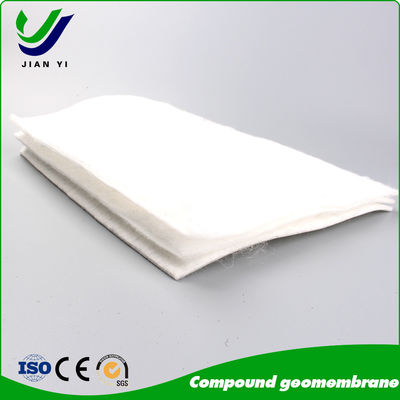
High-Permeability PP Staple Fiber Geotextile
Engineered for easy construction and superior performance in infrastructure applications, this geotextile delivers reliable filtration, separation, drainage, reinforcement, and protection functions.
Product Overview
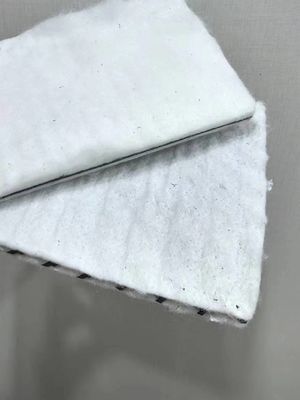
Manufactured from polypropylene staple fibers, this geotextile is processed through advanced needle-punching technology that interweaves and entangles fibers into a standardized fabric mesh. The result is a versatile geosynthetic material designed for demanding infrastructure applications.
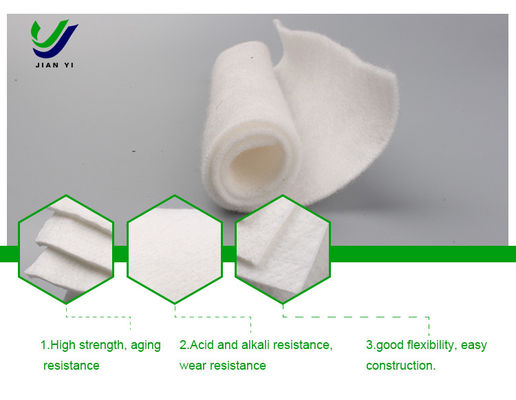
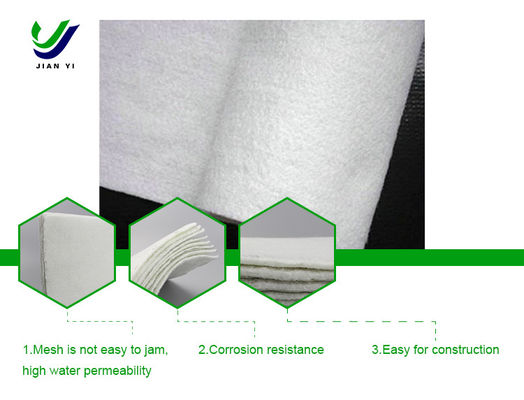
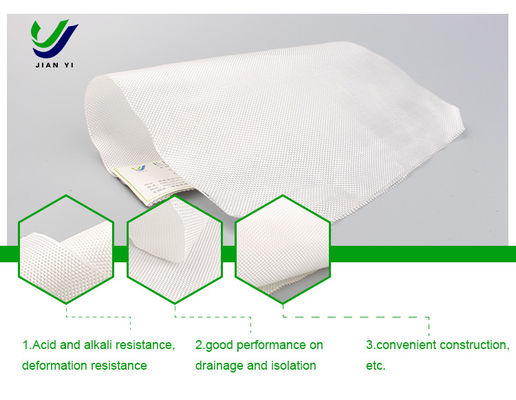
Superior Water Permeability: Maintains optimal water flow under soil and water pressure, accelerating drainage and preventing water accumulation
Exceptional Corrosion Resistance: Polypropylene construction ensures resistance to acids, alkalis, oxidation, and insect damage
Easy Installation: Lightweight design simplifies handling, reduces labor intensity, and improves construction efficiency
Application Areas
Ideal for highway, railway, tunnel, and dam construction projects. Provides essential functions including isolation, filtration, drainage, reinforcement, protection, and enhancement to improve project quality while reducing costs and construction timelines.
Installation Guidelines
Lightweight & Flexible: Easy to transport and lay according to project specifications
Custom Sizing: Can be freely cut to match project dimensions
Proper Overlap: Adjacent geotextiles should overlap 15-20cm, secured with staples or soil pressure
Surface Preparation: Lay on flat, clean base surfaces without wrinkles
Damage Prevention: Avoid contact with sharp objects during construction